Management Pitfalls to Mastery Cohorts
Transform from a first-time manager into a confident leader. Avoid the 22 most common pitfalls and unlock your team’s full potential.
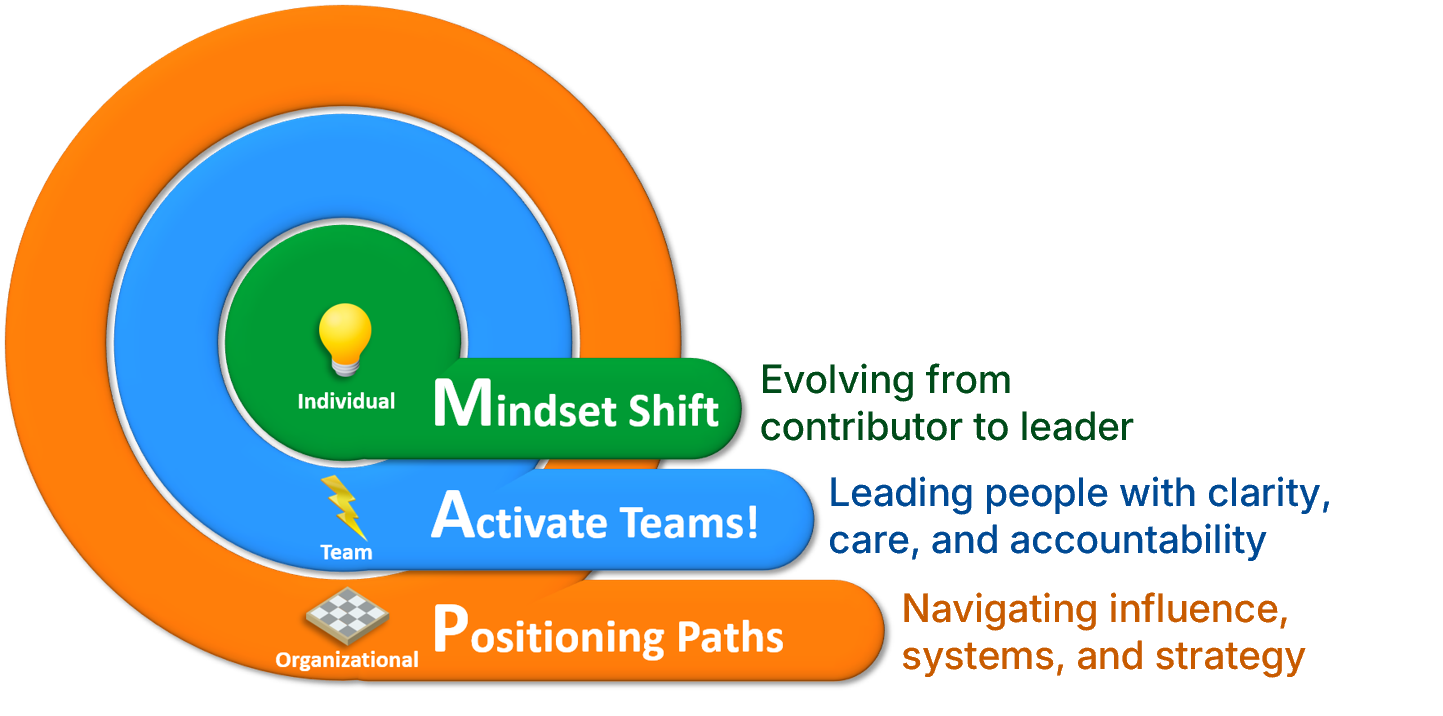
Management Pitfalls to Mastery Cohorts Leadership Series compiled a list of the 22 most common pitfalls that first-line and new managers face. These are divided into three key categories named the M.A.P.
Target Audience
- First-line Managers
- Aspiring Managers
(includes Supervisors, Leads, and Individual Contributors on the cups of people management)
Why Choose This Leadership Series
- Focused Cohort Learning: Grow alongside peers at similar leadership stages for relevant, shared insights.
- Proven Pitfall Framework: Master 22 common management mistakes with clear, practical solutions.
- Hands-On Tools: Use ready-to-apply frameworks and resources to strengthen team performance.
- Expert-Guided Growth: Learn from seasoned faculty with cross-industry leadership experience.
Uniqueness & Value
Cohort-Based & Common Levels
Consistent peer groups at similar band levels ensure targeted, strategic content and discussions.
College-Accredited Courses & Certificates
WASC-accredited, degree-bearing units, transcripts, and certificates—eligible for tuition assistance/reimbursement.
Condensed & Concrete
Research-backed, tactical modules, actionable advice, real cases, and a hands-on capstone practicum—with Elevate’s signature TrailBlaze Tools™ homework-free.
Career & Competency Connected
Lessons tied to any job function through the Competency DNA Matrix for immediate workplace relevance.
Cross-Industry Collaborations
Learn alongside participants from multiple industries and sectors for broader perspectives.
Champions
Led by world-class Elevate faculty, Executive Advisors, and Guest Speakers who bring real-world expertise.
Customized Report
Managers receive a tailored report to incorporate into individual performance development plans.
Management Pitfalls
Prevent and preempt the 22 most common management pitfalls—grouped into 3 major categories.
- Over-Relying on Technical Skills
- Failing to Delegate
- Trying to Be Everyone’s Friend
- Not Modeling Work-Life Boundaries
- Neglecting their Own Development
- Assuming Authority Equals Influence
- Misunderstanding Power Dynamics
- Micromanaging
- Avoiding Difficult Conversations
- Avoiding Conflict
- Lacking Clarity in Expectations
- Not Giving Regular Feedback
- Being Inconsistent
- Ignoring Team Dynamics
- Failing to Recognize and Reward
- Overcommitting the Team
- Not Understanding Business Priorities
- Reacting Instead of Planning
- Not Managing Up
- Not Building Cross-Functional Relationships
- Resisting Change
- Failing to Adapt Communication Style
The M.A.P. (Solutions for Pitfalls)
Navigating Mid-Management Pitfalls with Clarity and Confidence
Mindset SHIFT
From Individual Contributor to Management Leader
Management Pitfalls
- Over-Relying on Technical Skills
- Failing to Delegate
- Trying to Be Everyone’s Friend
- Not Modeling Work-Life Boundaries
- Neglecting their Own Development
- Assuming Authority Equals Influence
- Misunderstanding Power Dynamics
- Micromanaging
Mindset SHIFT functions as the foundational short course in the From Management Pitfalls to Mastery Cohorts series, designed for first-line and aspiring managers ready to lead with strategic focus, as well as intention and influence. This experiential learning short course series targets 8 of the 22 most common mid-management pitfalls—specifically the ones rooted in legacy mindsets that can limit leadership growth. Through three focused units, participants move from pitfalls such as defaulting to doing, micromanaging, and assuming authority equals influence to positive solutions, such as strategic delegation, impactful influence, and understanding power dynamics (beyond authority). The result? Leaders and managers who think, act, and lead at the next level.
- Strategic Delegation: From Technical Tasks to Leader and Manager
Shift from technical execution to strategic delegation using tools like the Delegation Scope Ladder and Expertise-to-Leadership Shift Map. - Intentional Evolution: Grow with Possibilities (and Personal Boundaries)
Redefine relational dynamics and reclaim energy through frameworks such as the Connection vs. Closeness Spectrum and Boundary Language Bank. - Practical Power Dynamics: Lead Beyond Your Title
Navigate influence, trust, and multidimensional power using the Power Source Mapping Tool and Quiet Power Grid.
Activate TEAMS!
Empower Teams for Impactful Interpersonal Dynamics
Management Pitfalls
- Avoiding Difficult Conversations
- Avoiding Conflict
- Lacking Clarity in Expectations
- Not Giving Regular Feedback
- Being Inconsistent
- Ignoring Team Dynamics
- Failing to Recognize and Reward
- Overcommitting the Team
Activate TEAMS transforms managers into catalysts of communication, clarity, and collaboration. This short course experience tackles 8 of the most team-critical pitfalls, from avoiding difficult conversations to overcommitting the team. Whether you’re struggling to give feedback, align expectations, or energize team dynamics, this short course equips you with actionable tools and visual frameworks to lead teams with trust, transparency, and team-centered strategy. By addressing what managers often avoid—conflict, inconsistency, disengagement—participants develop the confidence and systems to empower others without burnout, misalignment, or morale dips. The outcome? Teams that thrive because their leaders communicate clearly, recognize strategically, and align relationally.

Positioning PATHS
Navigate Organizational Structures & Systems—Strategically
Management Pitfalls
- Not Understanding Business Priorities
- Reacting Instead of Planning
- Not Managing Up
- Not Building Cross-Functional Relationships
- Resisting Change
- Failing to Adapt Communication Style
Positioning PATHS equips rising leaders to think bigger, communicate smarter, and operate more strategically within complex systems. This short course tackles 6 advanced manager pitfalls that often derail influence and upward effectiveness—like reacting instead of planning, failing to manage up, or resisting change. Through real-world scenarios and dynamic tools, participants learn to clarify business priorities, craft strategic messages, and drive impact across functions and levels. The program develops forward-thinking, adaptable leaders who can build credibility, anticipate change, and bridge silos. The outcome? Managers who lead teams amidst megatrends and macro systems.